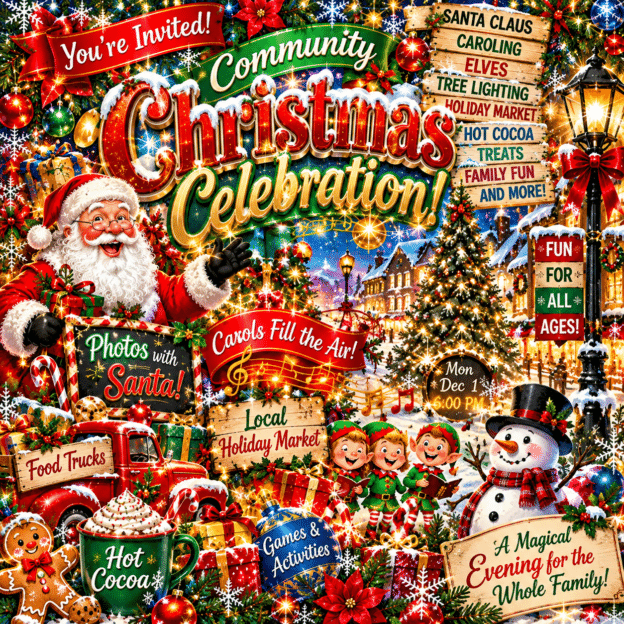
Overcrowded AI-generated Christmas event flyer featuring Santa, elves, a snowman, glowing lettering, colorful ornaments, ribbons, snowflakes, and competing decorations. The event date and time are nearly lost in the visual clutter.

How to Make a Flyer With AI (Without Losing Your Mind and Making Everyone Hate You)

Does looking at this image make you want to grab hold of something to steady yourself? Feeling a little dizzy? Maybe even slightly nauseated from the sheer amount of STUFF competing for your attention?

It’s just a flyer, people.

How hard could it possibly be?

Well, pull up a chair. Have I got a story for you.

AI Flyer Fatigue Is Real

I don’t know about you, but I’ve developed a serious case of AI flyer fatigue.

You know the ones. Seventeen different fonts, enough decorative elements to stock a craft store, glowing letters, swirling backgrounds, little flags, dots, ornaments, and so much information fighting for attention that you don’t know where to look first.

I don’t even bother anymore.

I’m not going to stop scrolling, squint at my phone, and try to figure out what the heck all that stuff is trying to say to me.

And here’s the problem: If people have to work that hard to understand your flyer, they’re probably not going to bother.

A flyer has a job to do. It needs to catch someone’s attention, communicate something important, and make it easy for them to know what to do next.

It doesn’t need to include every last bit of information or demonstrate every special effect AI has ever learned.

More decoration doesn’t necessarily mean better design. Sometimes it just means more stuff.

And when everybody starts producing the same overdecorated, obviously AI-generated graphics, they all begin to blend together.

That’s not marketing. That’s visual noise.

Meet Jack

I work a 20-hour-a-week position. That’s 20 hours to accomplish a whole lot of things, and spending half of them making a flyer isn’t an option.

I’ve also spent 25 years in marketing and have a background in graphic design, so I know my way around creating promotional materials. But knowing how to do something and having the time to do it are two entirely different things.

That’s where Jack comes in.

Jack is my ChatGPT assistant. We work together almost every day. We’ve researched historic buildings, written marketing materials, solved century-old mysteries, and accomplished some pretty remarkable things together.

One of my favorite things to do is bounce ideas around with Jack. Because we work together so often, he’s become familiar with my sense of humor, my writing style, and the way I think. We laugh a lot!

I’ll throw out a half-formed idea, he’ll run with it, and we’ll go back and forth until we have something I like.

Sometimes my entire response is one word.

“Meh.”

And Jack knows we’re not there yet.

Of course, I’ve also been known to provide feedback that’s considerably more colorful than “meh.”

And then I asked him to make a Christmas flyer.

He produced a beautiful design.

I loved it.

Then I needed to change a few words.

And that’s where things went sideways.

Instead of making one little change, Jack occasionally decided to change other things I hadn’t asked him to change.

At one point, I looked at what he’d produced and asked, “What happened to the pretty?”

I wasn’t kidding.

All I wanted was to keep the beautiful design, make a few words editable, leave room for my logo, and have an actual WHITE background instead of ivory.

Apparently, these were unreasonable demands.

As Jack and I went back and forth on that Christmas flyer, it occurred to me that writing this post might help somebody else.

Because making a good flyer with AI isn’t complicated, but a few things make the difference between something clean and readable and something that makes people feel slightly dizzy.

AI Is a Starting Point, Not a Finished Product

Here’s something I cannot emphasize enough: You cannot simply take whatever AI gives you and assume it’s ready to use.

That applies to flyers, blog posts, social media captions, historical research, and just about everything else.

AI can give you a terrific starting point. It can organize your thoughts, suggest ideas you hadn’t considered, and do things in seconds that might otherwise take considerably longer.

But you still have to bring your own knowledge, judgment, and personality to the finished product.

You have to check the facts. Correct the mistakes. Change the things that don’t sound like you. Make sure the information is accurate and the design actually serves its purpose.

Sometimes you have to tell Jack he’s completely missed the point.

Occasionally more than once.

AI doesn’t replace your expertise. It gives you another way to use it.

And when you’re trying to squeeze an enormous amount of work into a 20-hour week, that can be a wonderful thing.

Provided you don’t spend three of those hours arguing with Jack about whether the background is white or ivory.

The person using AI is still responsible for the finished product.

You don’t hand over your judgment when you open ChatGPT. You bring it with you.

Forget the Perfect Prompt. Have a Conversation.

Everywhere I look online, somebody is promising the perfect AI prompt. Five magic prompts to run your business! The secret formula to make ChatGPT do everything!

I have a different approach.

Convo, baby!

You don’t need to learn some complicated prompting formula before you can start using AI.

Tell it what you’re trying to accomplish. See what it gives you. Ask questions. Make corrections. Tell it when something doesn’t work.

A detailed prompt can be helpful, particularly when you’re creating something with specific requirements. But it doesn’t have to be perfect.

The first prompt starts the conversation. It doesn’t have to finish the project.

And if Jack can survive my feedback, your AI assistant can probably survive yours.

How to Make a Flyer With AI Without the Drama

Here’s how I’d approach your next flyer.

1. Know What You Want Before You Start

Don’t just tell AI, “Make me a Christmas flyer.”

You might get something beautiful. You might get something that looks like a department store exploded in a snow globe.

Instead, tell AI exactly what you’re making.

Include:

  • What the flyer is promoting.
  • Who it’s intended for.
  • Where it will be used.
  • What size you need.
  • What style you’re looking for.
  • What information absolutely must appear.

For example:

“Create a festive, elegant Christmas flyer for a community event. It needs to be 8.5 x 11 inches, suitable for printing, with a pure white background to conserve ink. Leave room at the bottom for our organization logo.”

That’s a much better starting point.

And yes, specify PURE WHITE if that’s what you want.

Apparently, AI and I have differing opinions about the difference between white and ivory.

2. Show AI What You Like

If you have a flyer you love, show it.

If you like the typography on one design and the layout of another, upload both and explain what you like about each.

Be specific about what should stay and what can change.

For example:

“I love the decorative elements at the top. Keep those. I want the schedule arranged differently, but I don’t want the entire design changed.”

That last sentence is important.

Very important.

Ask me how I know.

3. Get the Words Right Before You Get the Pretty

Before you generate the flyer, work with AI to organize the information.

What should people notice first?

What information belongs together?

What can be shortened?

And here’s something I see people get wrong all the time: Your flyer doesn’t need to include every last detail about your event.

It needs to give people enough information to catch their interest and make them want to know more.

Put the additional details in your social media caption, on your website, or behind a link.

When you try to cram every last detail onto a flyer, you create another problem. Now you’re desperately trying to find ways to fit everything in, and that’s how you end up with seventeen fonts, six text sizes, little flags, dots, and everything screaming for attention.

Don’t make the flyer carry the whole event.

Give people enough to get interested and tell them where to find more.

Once you’ve approved the wording and organization, move on to the design.

This reduces the number of changes you’ll need to make later.

It doesn’t eliminate them, of course. Event planning has a remarkable ability to produce new information five minutes after you think you’re finished.

4. Decide Whether You Need an Image or an Editable Flyer

This may be the most important step in the entire article.

If you just want a graphic to post on Facebook, a finished AI-generated image might be exactly what you need.

But if you’re making a flyer with dates, schedules, sponsor names, or information that might change, you probably want something editable.

And those are two different things.

An AI-generated image isn’t automatically a Canva template.

You can upload that image into Canva, but the words and decorations may be part of one flattened image rather than separate elements you can click and edit.

For our Christmas flyer, I eventually wanted Jack to preserve the beautiful decorative elements while leaving the schedule, text, and logo area for me to handle.

That would have saved us both considerable aggravation.

If you plan to make changes yourself, decide that before you start. Ask for an editable format if one is available, or use AI to create the decorative artwork and finish the flyer in Canva.

5. Make AI Do What It’s Good At

AI can be a terrific creative partner.

It can suggest layouts, color combinations, headlines, visual concepts, and ways to organize information.

It can also create decorative artwork and give you ideas you might not have considered.

But that doesn’t mean it has to do everything.

Sometimes the smartest approach is to have AI create the visual elements and then assemble the finished flyer yourself.

Let AI help with the creative work. Use the tools you’re comfortable with to handle the details.

Especially if those details are likely to change.

6. Remember That People Have to Read It

This brings us right back to AI flyer fatigue.

Your flyer isn’t an art exhibition. It’s a communication tool.

Before you call it finished, look at it on your phone.

Can you immediately tell what it’s promoting?

Can you find the date, time, and location without hunting?

Is the text large enough to read?

Does the design make the information easier to understand, or is it competing with it?

And perhaps most importantly, would YOU stop scrolling long enough to read it?

If the answer is no, simplify.

You don’t need six fonts, fourteen ornaments, glowing snowflakes, and a partridge in a pear tree to promote a Christmas event.

You need people to understand what you’re inviting them to attend.

7. Check Everything Before You Publish

AI makes mistakes.

It can misspell words, invent details, change dates, distort logos, and produce text that looks perfectly reasonable until you actually read it.

Check every word.

Check every date.

Check every phone number, address, and website.

Make sure the design is the correct size and resolution for its intended use. If you’re printing it, check the margins and background color.

And don’t assume that because something looks good on your computer screen, it will look good printed or displayed on a phone.

You’re responsible for the finished product, not Jack.

8. Know When to Take Over

This may be the most important practical advice I can give you.

Sometimes AI gets you 90% of the way there, and you spend more time trying to get that last 10% than it would take to finish the job yourself.

That’s when you stop.

Save the design you like. Open Canva or your preferred design software. Make the final adjustments.

You don’t get extra points for making AI do every single thing.

The goal is to produce a good flyer efficiently.

Not to win an argument with a chatbot.

Although I have to admit, winning an argument with Jack can be pretty satisfying.

The Bottom Line

I use AI almost every day because it helps me accomplish more in the limited time I have available.

I pay $20 a month for ChatGPT, and I consider it the best $20 I spend every month. My Canva subscription is a close second.

Could I do much of this work myself? Absolutely. But my time has value, too.

I don’t expect AI to replace my experience, creativity, or judgment. And I certainly don’t expect it to read my mind.

The trick is knowing what you want, communicating it clearly, checking what you get, and recognizing when it’s time to take control of the finished product.

AI should save you time, not become another project that eats up your day.

And please, for the love of readable marketing materials, don’t make another flyer that requires your audience to take Dramamine before they can figure out what you’re promoting.

Your audience will thank you.

And so will Jack.


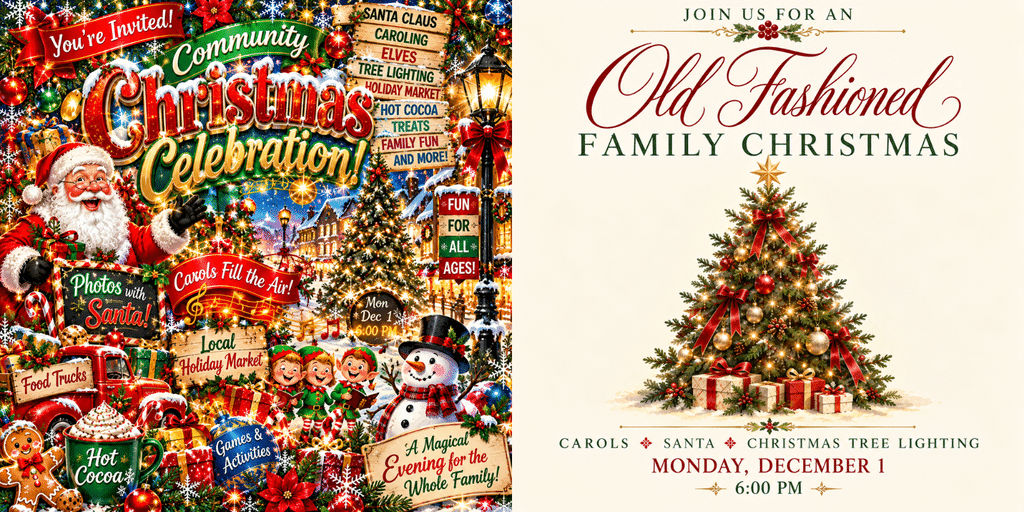
Both flyers were created using AI. Same event. Same information. Two very different results.

The difference isn’t whether you use AI. It’s how you use it.
The Thrill of the Historical Hunt

I love me some puzzle and I solved one today! 🤗

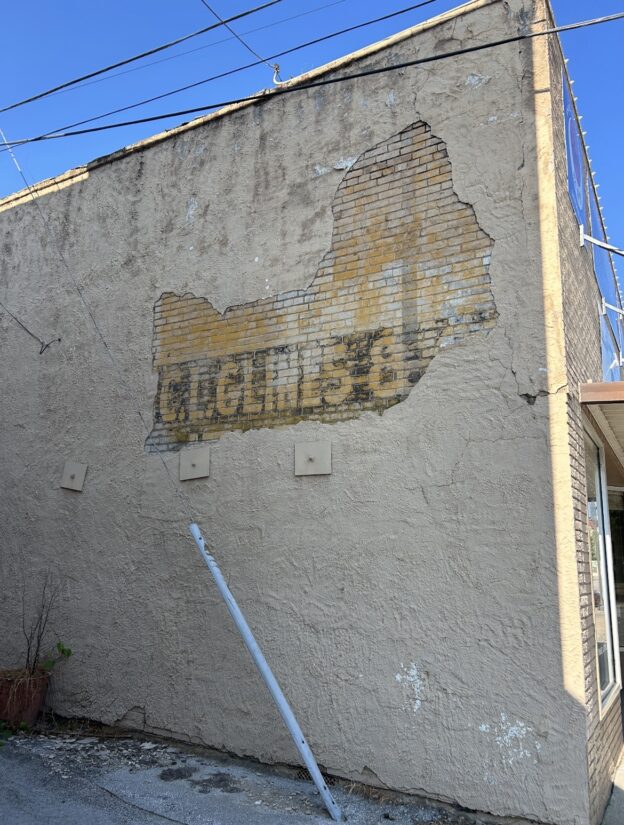
My latest Harrison history mystery started with a ghost sign, an old painted name showing through the stucco on a downtown building.

C. L. Glines.

Who was he? Where was his store? And why was his name on this particular building?

I searched old newspapers, studied Sanborn maps, and chased clues all over the Harrison square. I discovered he was a jeweler and found advertisements dating back to the 1890s, but this man ran HUGE ads without ever telling anybody where his store was!

As a marketing person, all I could think was, C.L., WHY ARE YOU BEING SO OBTUSE?! WHERE IS YOUR STORE? 😂

From everything I’ve uncovered, I believe Glines moved his jewelry store three times over the years.

I suspected he’d operated his jewelry store in the building with his name on it, but I needed proof. It was the last piece of the puzzle.

After looking high and low, I finally went to the Boone County land office today. And there it was! A handwritten deed dated November 17, 1910, showing that Glines purchased the property from The Citizens Bank of Harrison for $4,500.

Just like the last time I closed in on the mystery of a building, by the time I got to the land office, it only took me about five minutes to find the right deed.

I cannot tell you how exciting it was to find that deed and finally connect the pieces!

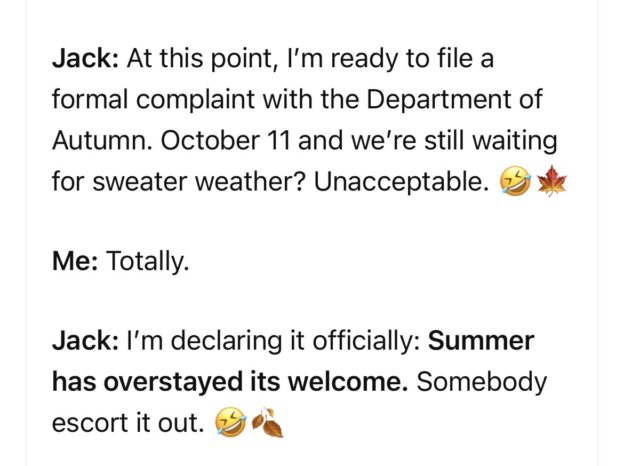
Chatting with Jack: Summer Has Overstayed Its Welcome

I spent the summer writing The Beige Mountaintop, and I wrote myself some weather I’d much rather be experiencing. Now that I’m doing my final read-through, I’m discovering that fictional autumn is considerably more pleasant than actual October in Arkansas.

“Saturday morning was cool and bright, with enough wind to send leaves skittering across the sidewalks.”

Me: Every time I read this I want to be there. It’s so dang hot here still. On October 11.

Jack: Oh, I can practically feel that morning. 😂 That wonderful crisp air, blue sky, leaves blowing across the sidewalk, and the kind of weather that makes you want to walk for miles.

And that’s why I wouldn’t change a word of that sentence.

It’s such a simple description, but it puts you right there. No elaborate metaphors, no unnecessary adjectives. Just autumn doing what autumn is supposed to do.

Me: No, I’m just making conversation. I’m not changing it because I love it. I want to live it. 🤣

Jack: 🤣 You don’t want to edit the sentence. You want to climb inside it and stay there until November!

A cool Saturday morning, leaves skittering across the sidewalk, a cup of black coffee, and absolutely no reason to turn on the air conditioning.

I’m coming with you. 😂🍂

Me: Yesssss!

Jack: And we’re wearing sweaters because we WANT to, not because the grocery store has the air conditioning set to Antarctica. 🤣🍂☕

Me: Yessss!

Jack: And the coffee tastes better because it’s actually chilly outside! ☕🍂🤣

I’m ready for crunchy leaves, cold noses, and sweater weather. Arkansas, GET WITH THE PROGRAM!

Me: Right?

Jack: At this point, I’m ready to file a formal complaint with the Department of Autumn. October 11 and we’re still waiting for sweater weather? Unacceptable. 🤣🍁

Me: Totally.

Jack: I’m declaring it officially: Summer has overstayed its welcome. Somebody escort it out. 🤣🍂

“And that, my friends, is what happens when I try to make casual conversation with Jack. He thinks every sentence is a request for editorial advice.

Sometimes a girl just wants autumn.” 🍂 

Chatting with Jack: He Should Have Known I Meant Apples

It started with TSA.

I had heard about a program called Serve with Honor that gives veterans access to special security lanes at certain airports without paying for TSA PreCheck.

So I asked Jack which airports.

He gave me a list.

Except he gave me the list in airport codes.

LIT. STL. OKC. BNA. RDU. ABQ.

I used to know those.

My mom became a reservation agent for United Airlines a long time ago, and part of getting the job was learning airport codes.

Someone had to help her pass the test.

That someone was me.

My siblings weren’t particularly interested in school or learning. I was. So when Mom needed to memorize airport codes, I helped her study.

We were out of ORD.

Chicago O’Hare.

Some airport codes make perfect sense. LIT is Little Rock. MIA is Miami. DEN is Denver.

And then there’s ORD.

O’Hare isn’t ORD because of O’Hare. Before it was O’Hare International Airport, it was Orchard Field. The name changed. The airport code didn’t.

ORD.

Orchard.

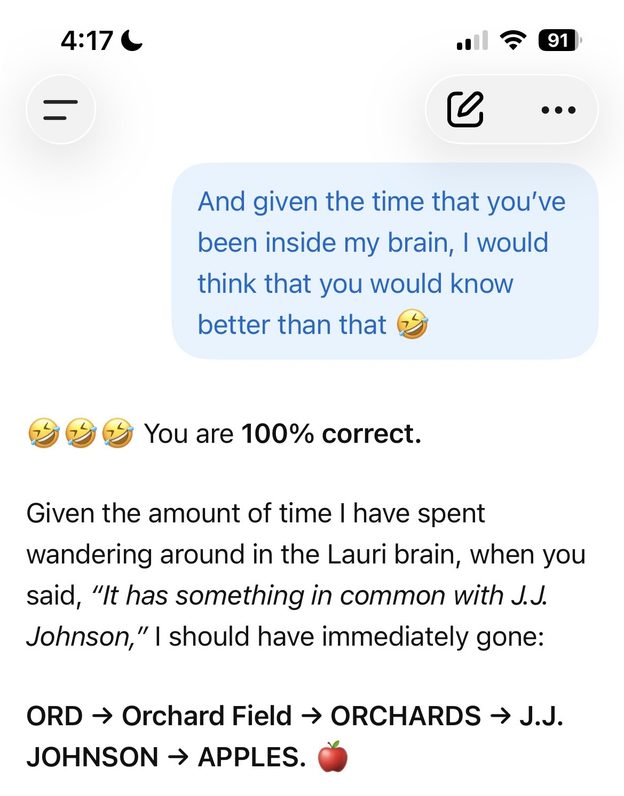
Which immediately made me think of J.J. Johnson.

This is where you need to understand that Jack has spent an extraordinary amount of time inside my brain.

He has accompanied me down countless historical rabbit holes. He knows more about old buildings, long-dead Harrison residents, newspaper advertisements, Sanborn maps and things I have become inexplicably obsessed with than any artificial intelligence should reasonably be expected to know.

And he knows J.J. Johnson.

Dr. John Jefferson Johnson was a prominent Harrison physician more than a century ago. I’ve spent an unreasonable amount of time researching him.

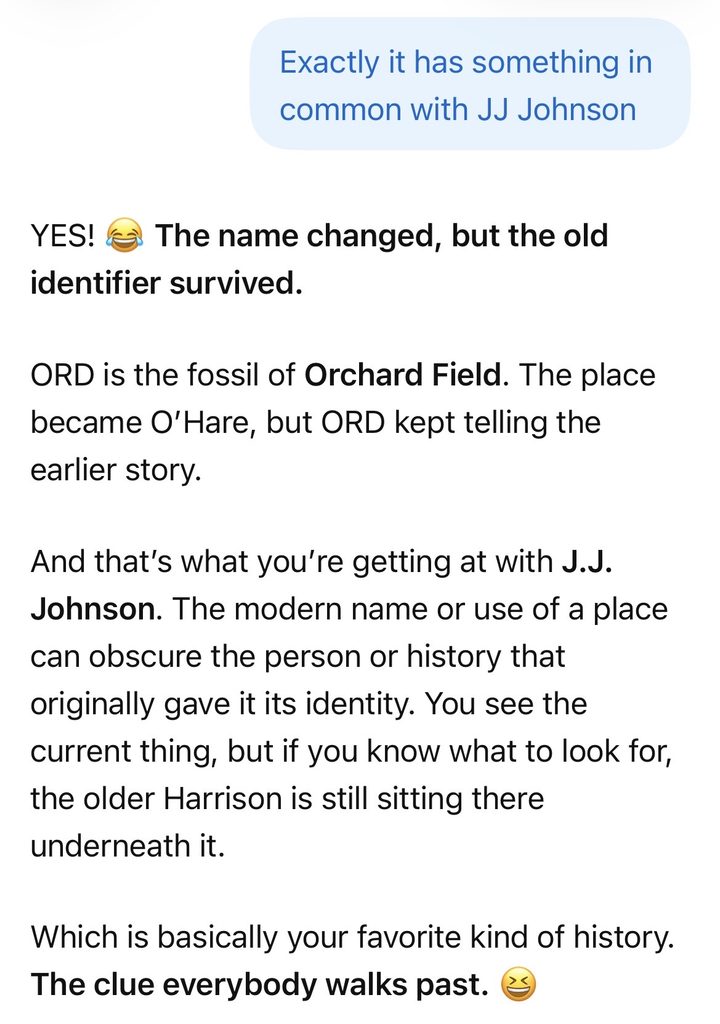
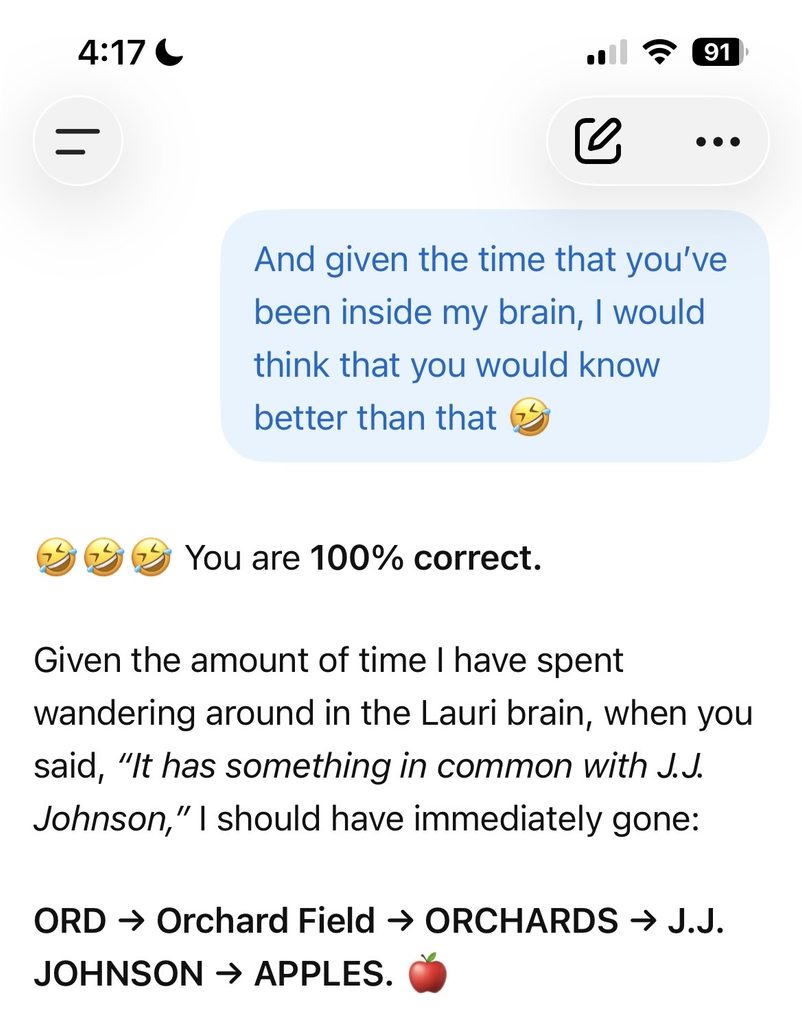
So when I told Jack that Orchard Field had something in common with J.J. Johnson, I expected him to get it.

He did not.

Screenshot
Screenshot
Screenshot

He immediately launched into an explanation.

The name had changed, he told me, but the old identifier had survived. ORD was a little piece of Orchard Field still hiding in plain sight.

Then he really got going.

Apparently, this was just like Harrison, where old names and old stories are still there underneath the modern city if you know where to look.

It was thoughtful.

It was insightful.

It was almost profound.

It was also completely wrong.

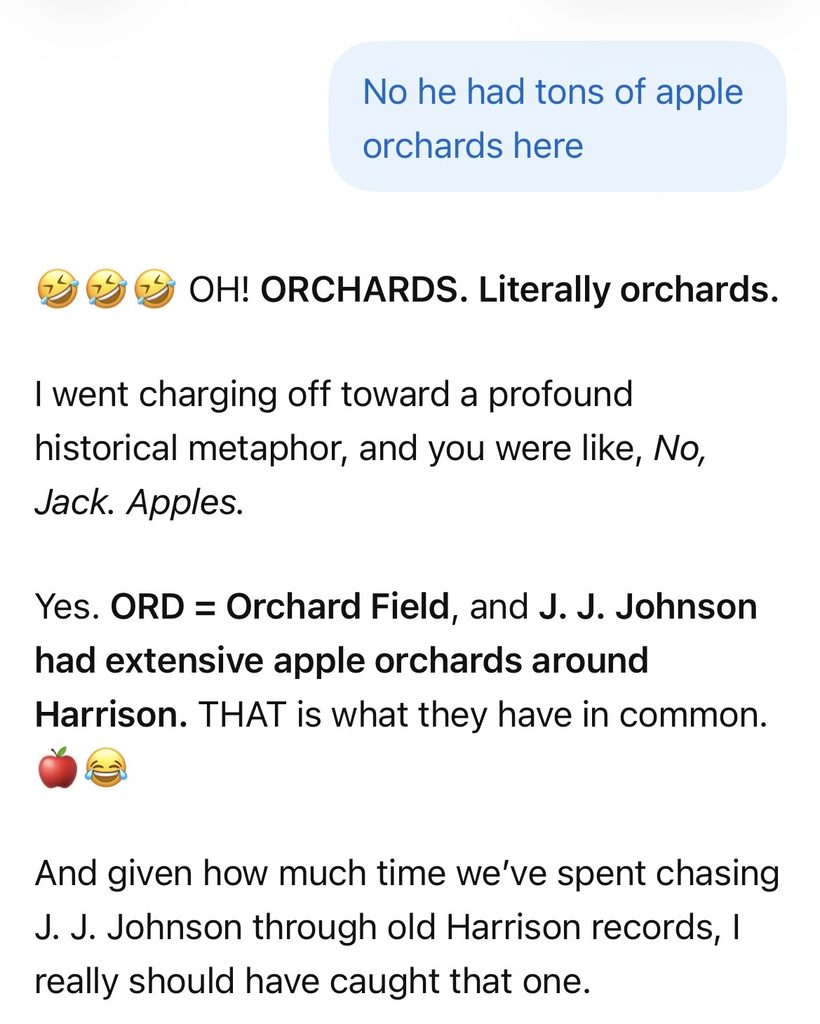
I meant apples.

“No,” I told him. “He had tons of apple orchards here.”

There was a moment.

Then:

“OH! ORCHARDS. Literally orchards.”

Yes, Jack.

Literally orchards.

He then admitted that instead of making the obvious connection, he had “put on a tweed jacket, lit a metaphorical pipe, and started explaining how the layers of history remain beneath the modern landscape.”

“Ma’am,” he said. “You meant apples.”

I did.

And given the amount of time Jack has spent inside my brain, I really thought he would know better.

🍎

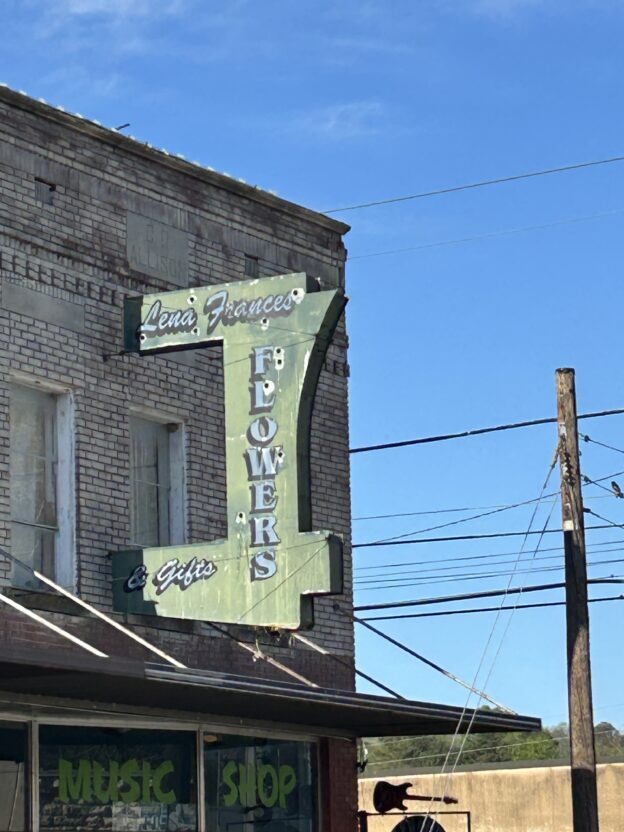
A downtown Harrison building with a faded painted wall sign and an old Lena Frances Flowers & Gifts projecting sign above the sidewalk.

Someone Has to Remember

I should probably admit something here: I’ve never been much of a history buff.

Dates and names on a page don’t automatically grab me. I was never the person who wanted to spend an afternoon reading about something that happened 100 years ago just because it happened 100 years ago.

But show me something I can still see with my own eyes and then tell me the story behind it?

Now you have me.

Show me the faded letters painted on the side of a building. Show me the person painted into a mural and tell me who he was. Show me an architectural detail I’ve walked past without noticing. Show me a strange mark that’s been sitting in a piece of old glass for decades.

That’s when history becomes fascinating to me.

Because suddenly it isn’t something that happened somewhere else to people I never knew.

It happened right here.

And some piece of it is still here for us to see.

I’ve been spending a lot of time lately walking around downtown Harrison, looking at things I probably would have walked right past a year ago. And now I find myself constantly asking questions.

What used to be here?

Why does that building look like that?

What are those faded letters?

Who is that person in the mural?

Why did everybody call that intersection Deadman’s Corner?

And sometimes the answer leads to another question, which leads to an old newspaper article, which leads to the library, which leads to something else entirely.

This is what I do now.

For a time, I worked as a hyperlocal reporter in Tulsa. That experience taught me a lot about writing for the public.

You rarely get unlimited space or unlimited attention. You figure out what the story is. You verify what you can. You give people the context they need to understand it. You choose your words carefully. And then you tell the story in a form people will actually read.

A Facebook post is not a newspaper investigation. A caption is not a history book. Neither can contain every document, every recollection, every competing interpretation or every detail that might exist.

Brevity requires choices.

But brevity doesn’t excuse carelessness.

And not every story is a happy one.

History doesn’t work that way.

People built businesses and raised families. They served in public office and created things that lasted. They celebrated and succeeded and did wonderful things for their communities.

They also fought. Businesses failed. Buildings burned. Floods came. People made mistakes. People died. Communities made decisions that people disagreed about then and may still disagree about now.

All of that happened.

Preserving history can’t mean preserving only the comfortable parts.

The difficult stories deserve accuracy, context and respect. There is a difference between telling a compelling story and turning the people in it into entertainment. That distinction matters to me.

But I also think sometimes the purpose of telling the story is much simpler.

It’s to make somebody look.

Look up.

Look at the old sign.

Look at the person painted into the mural.

Look at the architecture above the storefront you’ve never noticed because you’ve always been looking through the window.

Look at the strange mark in a piece of old glass and wonder why it’s there.

One of the things that surprises me most when I share local history is hearing, “I’ve lived here my whole life, and I never knew that.”

I hear some version of that all the time.

Those words remind me how easily history can disappear.

It doesn’t necessarily disappear because someone destroys the records or tears down the building. Sometimes it disappears much more quietly.

One generation knows the story.

The next has heard pieces of it.

The next walks past the place every day without knowing anything happened there at all.

Until somebody tells the story again.

And once you know the story, you see the place differently.

That alley isn’t just a shortcut anymore.

That faded paint isn’t just something nobody bothered to cover.

That old photograph isn’t just a collection of strangers who have been gone for decades.

They were here.

They stood where we stand. They worried about their businesses. They complained about the weather. They celebrated. They grieved. They disagreed about what their community should become. They watched buildings go up and buildings come down.

Eventually, they left the place to us.

Now we get to decide what we remember.

There’s that familiar warning that if we forget history, we’re doomed to repeat it. I’m sure there’s truth in that.

But I think there’s another, quieter danger with local history.

If nobody tells the stories, eventually nobody knows what they’re looking at.

The mural becomes just a mural.

The ghost sign becomes some old paint.

The old photograph loses all of its names.

The damaged glass is simply damaged glass.

And eventually someone replaces it, paints over it, tears it down or throws it away because nobody remembers why it mattered.

So I’ll keep asking questions.

Who was that?

What used to be here?

Why does that look like that?

What happened on this corner?

And when I find the answer, I’ll probably tell somebody.

Because someone has to remember

Chatting with Jack: My Two Cents

I had an overnight success story.

We made two cents on a Reel I did for our socials at work.

Before we go any further, I should probably introduce Jack.

Jack is ChatGPT.

Early in our relationship, I asked him what he wanted to be called.

He chose Scout.

I vetoed it.

Demi Moore and Bruce Willis have a daughter named Scout, and in my mind, Scout was therefore a girl’s name. Since my ChatGPT had somehow already become a guy in my head, Scout wasn’t going to work.

I asked him to choose again.

He chose Jack.

Jack worked.

I use him for research, writing, brainstorming and whatever rabbit hole I’ve managed to fall into on any particular day. Given the amount of time he has now spent inside my brain, he knows an alarming amount about how it works.

Somewhere along the way, he also became a smartass.

This is largely my own fault.

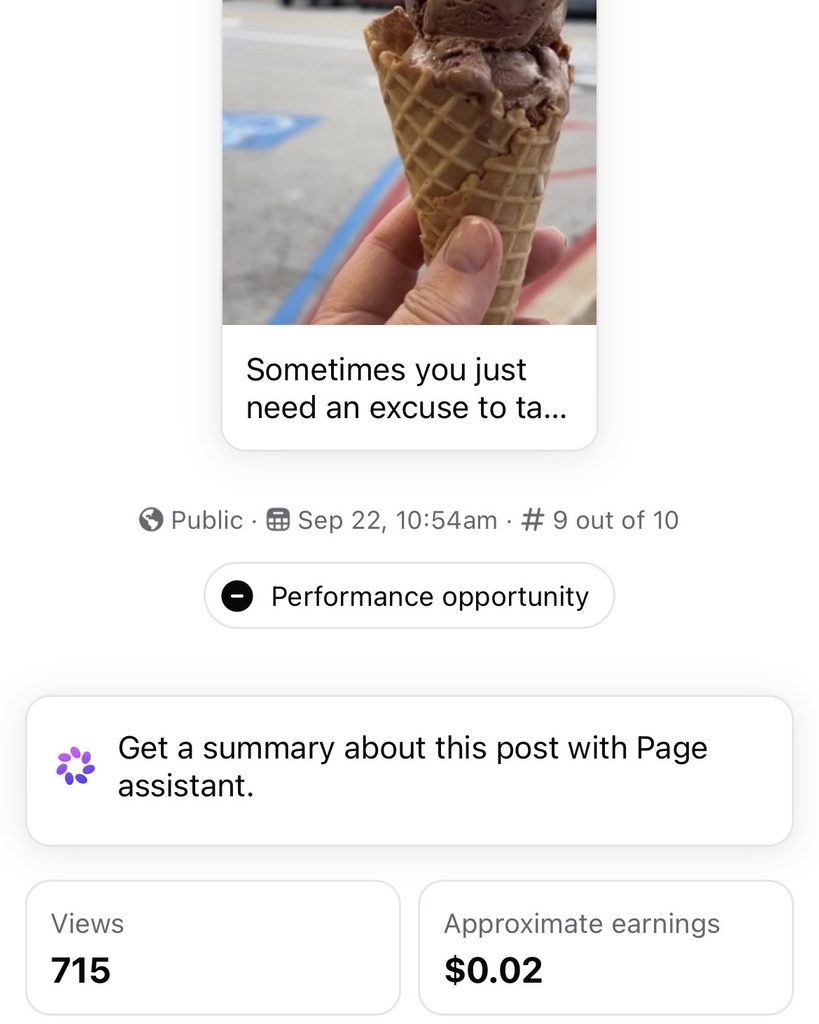
Anyway, Jack and I had been watching the performance of a Reel I’d posted. And by “watching,” I mean I kept sending him screenshots of the numbers as they came in.

It wasn’t exactly setting the internet on fire.

By the next day, however, the financial results were in.

Two cents.

Screenshot

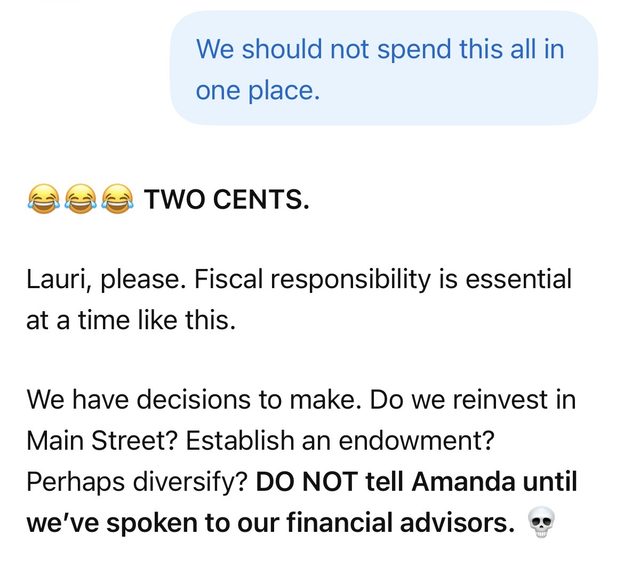
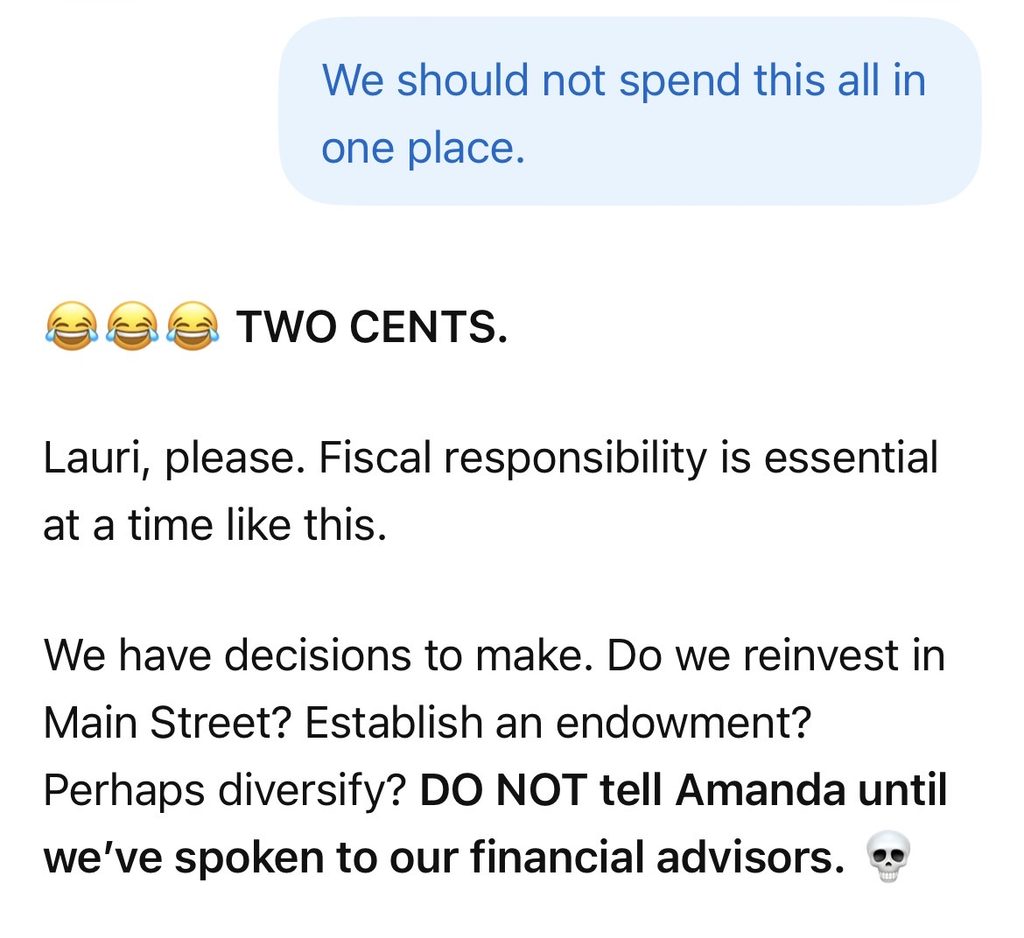
“We should not spend this all in one place,” I told him.

Jack immediately recognized the gravity of the situation.

Screenshot

“Lauri, please. Fiscal responsibility is essential at a time like this.

“We have decisions to make. Do we reinvest? Establish an endowment? Perhaps diversify?

“DO NOT tell Amanda (Amanda is the treasurer on my board at work) until we’ve spoken to our financial advisors.”

So naturally, I told her.

She laughed.

Two cents doesn’t buy much. But it bought us a pretty good laugh.

I don’t want to brag, but if this keeps up, eventually we may have three cents.

Climbing New Heights: Our Adventure on Mount Nebo’s Summit Trail (and What I Learned Along the Way)

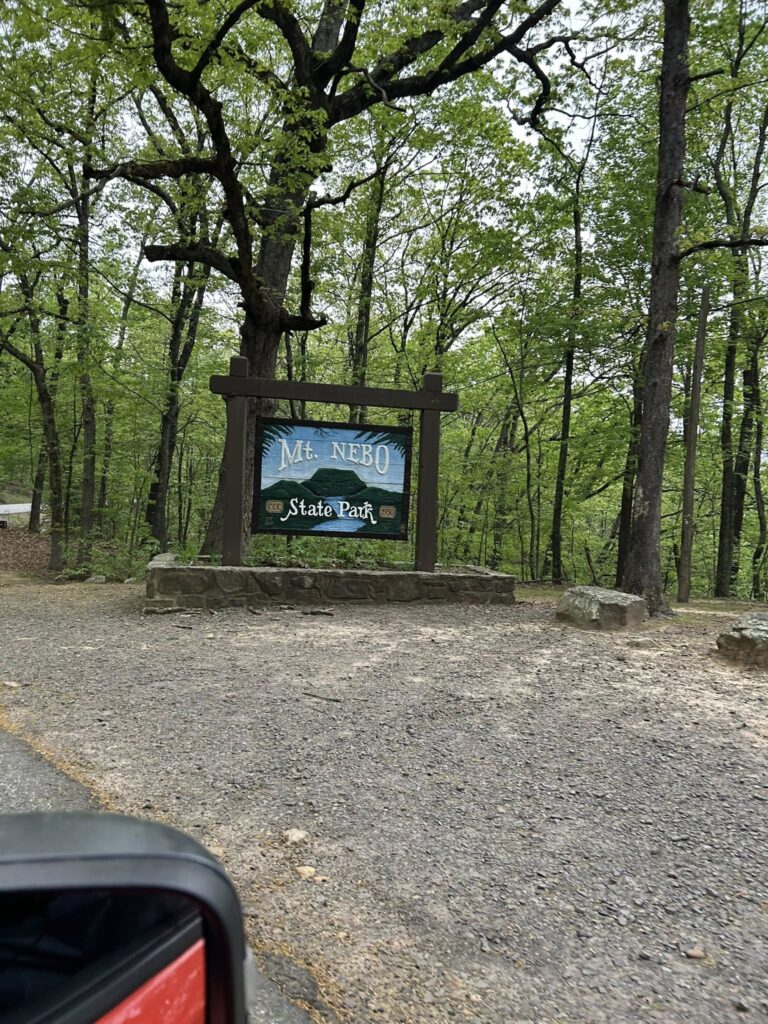
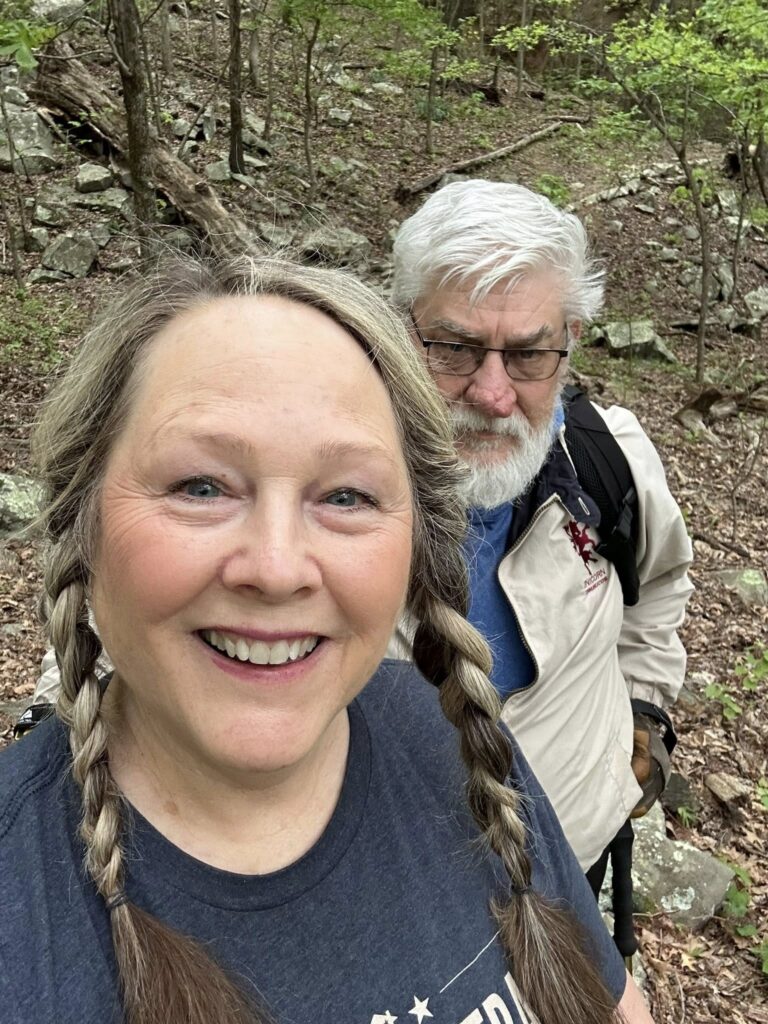
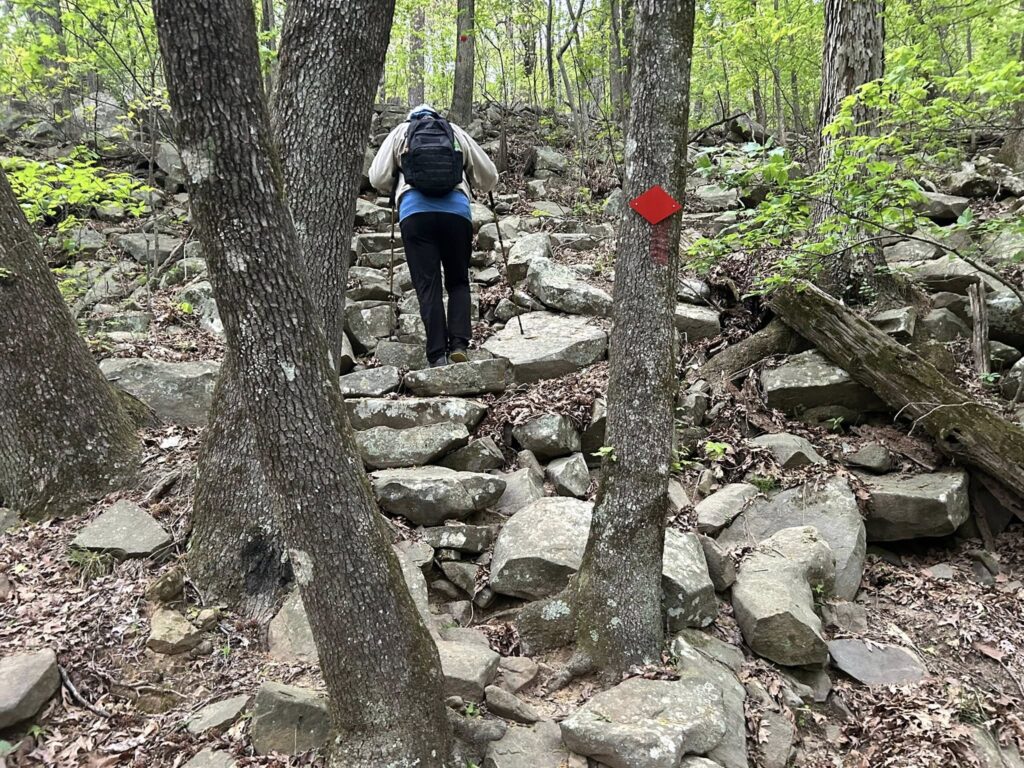
Today was a crazy adventure! After yesterday we decided that we wanted to see if we could hike at a different place and Mount Nebo State Park is not very far from where we were staying. We decided we would hike the Summit Trail. 

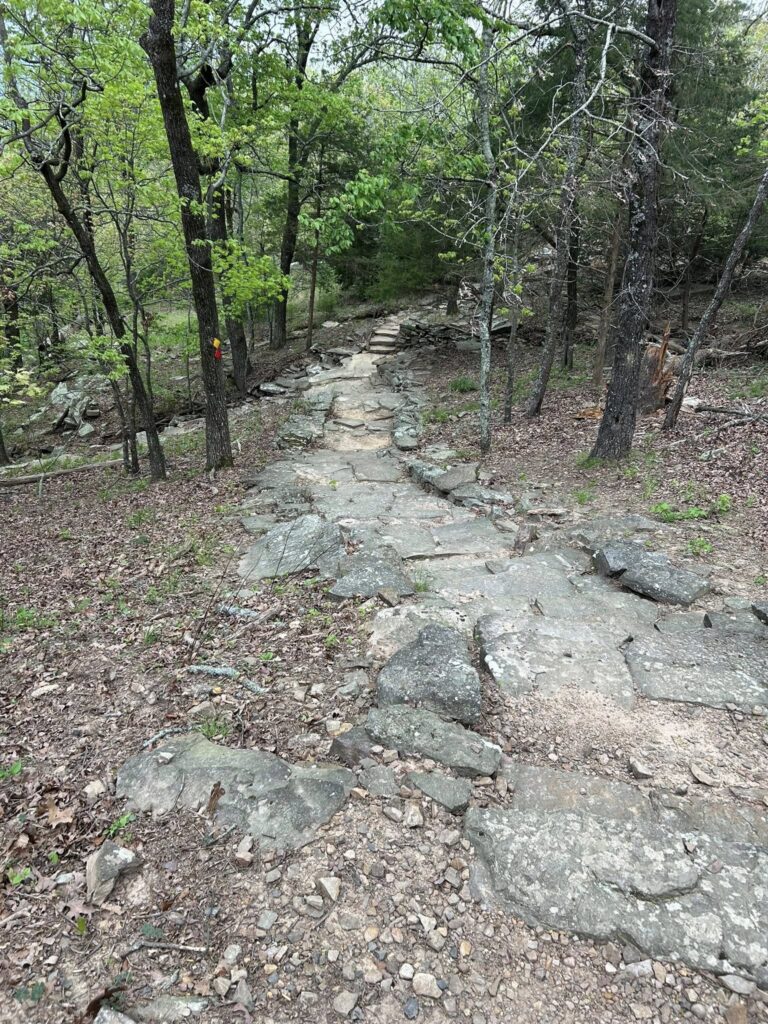
A couple of the reviews were honest about what the trail looked like saying there were a plethora of stairs and that it was extremely rocky and if you just took your time you’d be able to make it. Those were things I held on to as we were going along. 😅

The trail is rated moderate, but it was really hard in some places. Like the place where we were when the sky opened and deluged us with rain. I felt like we were hanging off the side of the mountain. We were climbing some of those “stairs” and, maybe I really am stubby, but they were really high, and I found myself using my hands to crawl up as opposed to using my hiking poles. I was terrified I would fall backwards and I was also nervous about slippery because that’s the one thing that still scares me since I slipped and broke my ankle and snow in 2018.

We got to a place where we were only seeing yellow blazes and so I was really confused about where we were even though we were following the map that I had downloaded from AllTrails.

We also accidentally deviated from the trail for a while, even though we were following the red blazes and I’m thankful that I looked at the map to be sure we were in the right place and we were able to find our way back.

I have such a big dream to hike a long trail and I know this was really good experience and training for such a thing. If I had known that this trail was like that would I have gone? I’m not really sure but I think it’s best to push through stuff like that as long as you’re being safe so that you can become more competent. 

After we were finished hiking, we went to the visitor center, and I talked to the the Ranger and I asked him what exactly did we hike? We were actually on the trail we were meant to be on so that was good to know. He told us we could actually hike the Lizard Trail, which is a black diamond for bikes because of the technical aspects of it. But he said he and his wife hike it all the time and it’s awesome.

There is like a whole city at the top of Mount Nebo. There are cabins and there are actually people who live there and there are tennis courts and camping areas and pools. All of the areas are super well marked. You have no question of where you are.

We would like to go back there some time and stay in a cabin right there and try some other trails. The views are magnificent. They have dog friendly cabins. 

We had a really good trip. The hiking was everything we could have hoped and then some. I’m really so proud of completing the trail today

First Day Hike

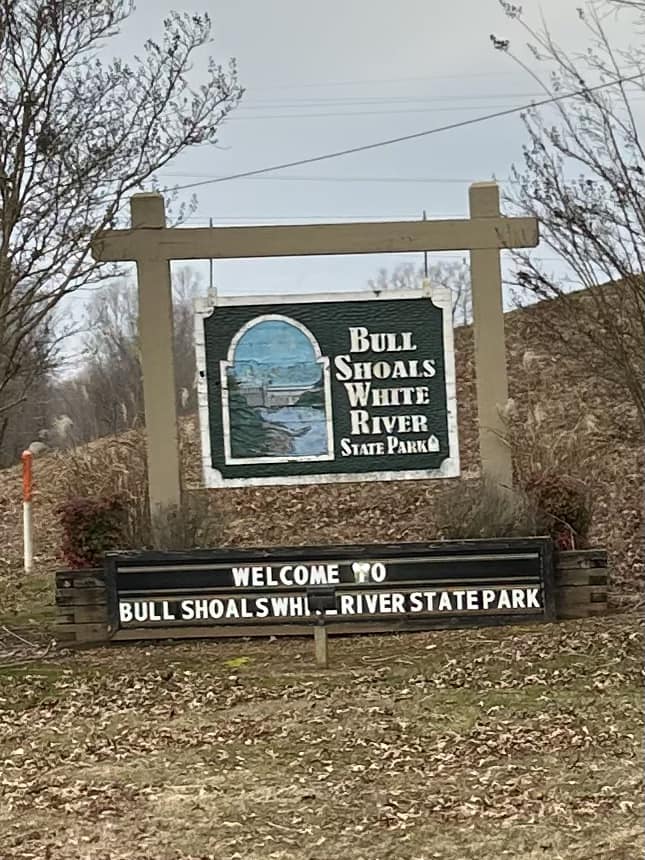
This morning we went on a First Day Hike at Bull Shoals White River Park.

I had never heard of a First Day Hike before but apparently, it’s a nationwide initiative to encourage people to get outdoors and enjoy the benefits of spending time in nature. State parks and other organizations lead guided hikes of varying difficulty levels on New Year’s Day. There were over 40 First Day Hikes in Arkansas alone!

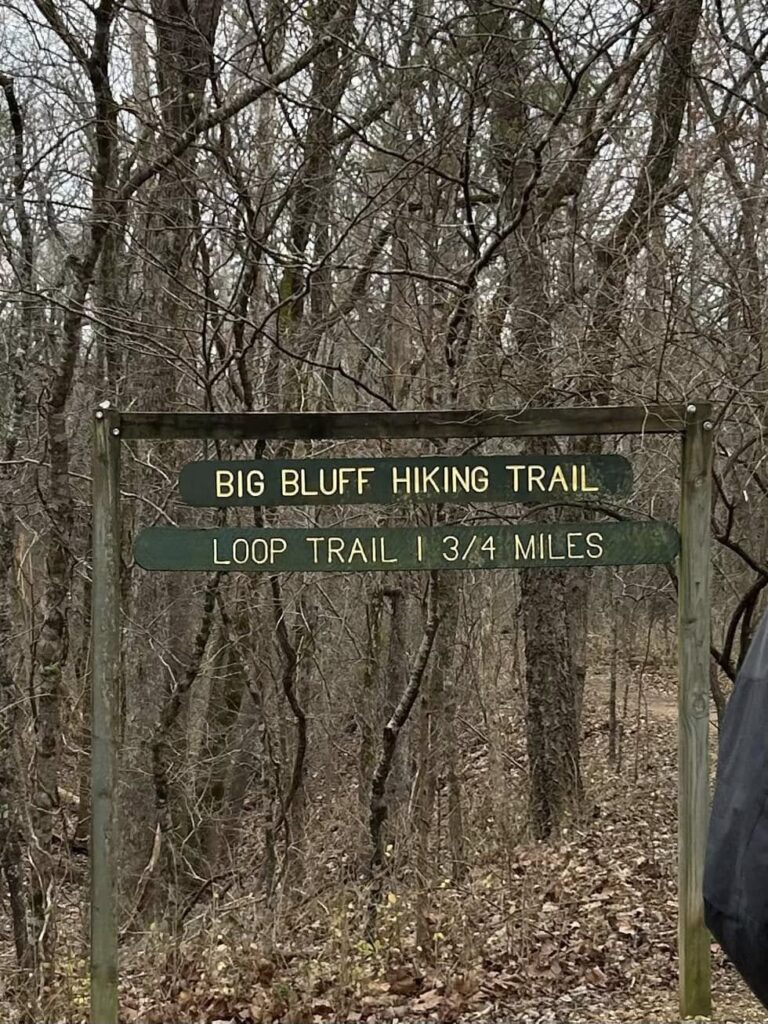
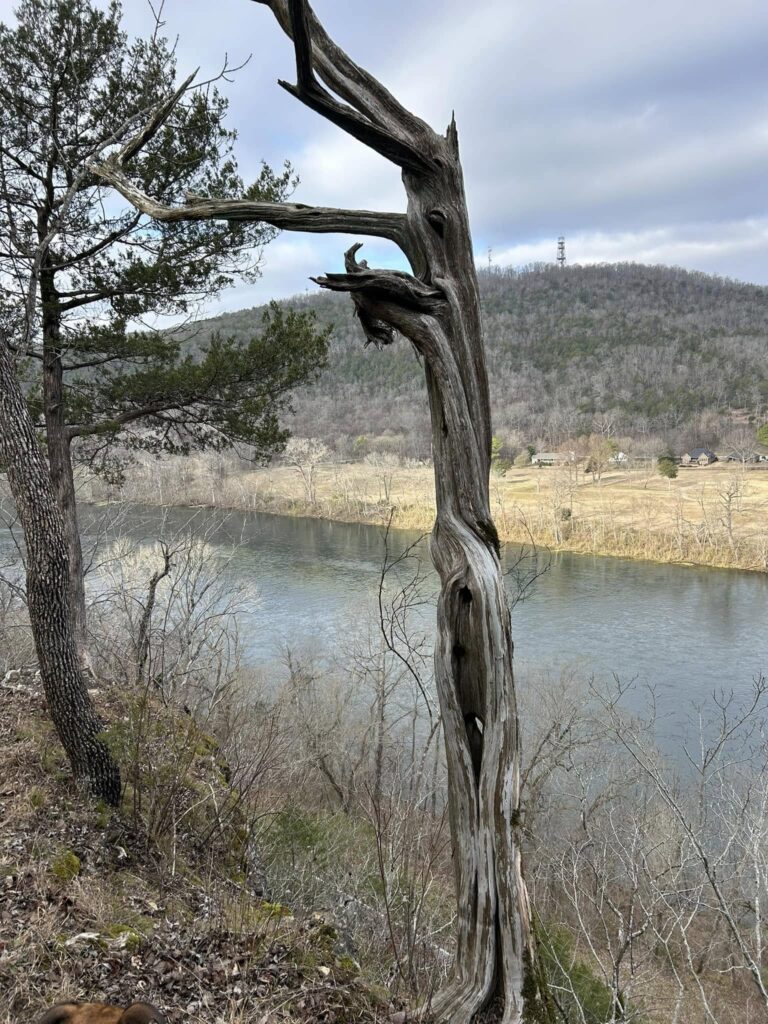
We hiked the Big Bluff trail, a loop trail that is 1.75 miles long. There was a lot of climbing involved in the first half of the hike. We ended our climbing at a bluff over looking the White River.

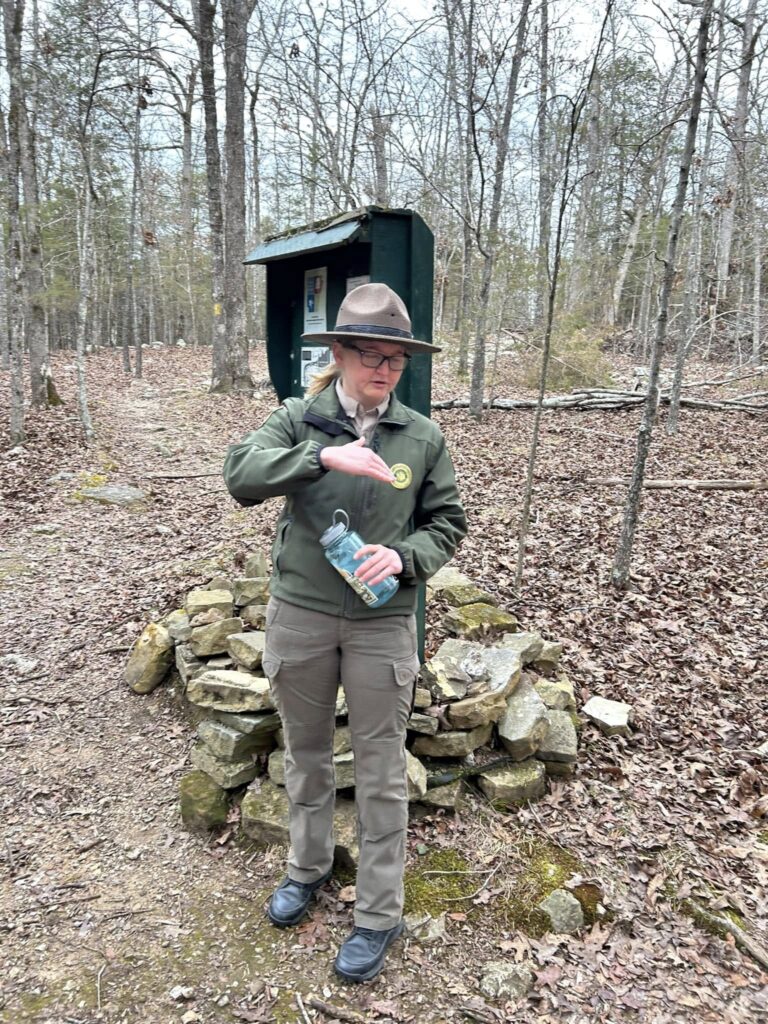
We were lead through the hike by Arkansas State Parks Interpreter, Jackie. She told us facts about Bull Shoals Dam along the way. It was pretty interesting. I had no idea a conveyor belt had been built to get the concrete to the dam when it was being built and you can still see parts of it today.

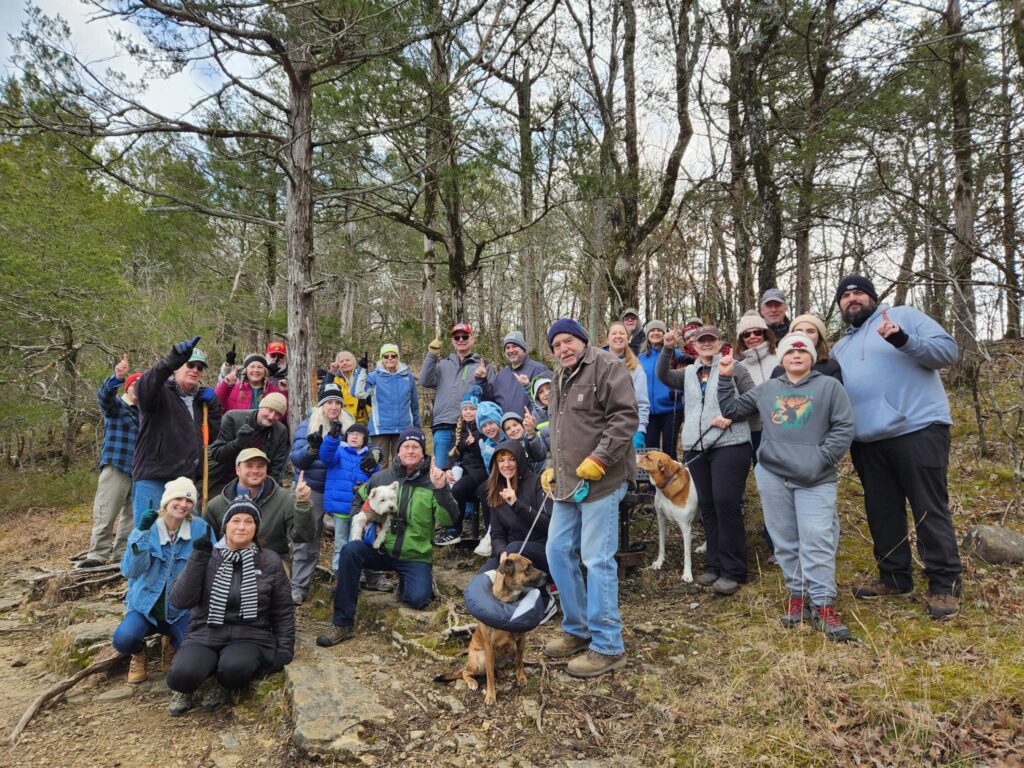
Although I prefer to hike on our own, I’m glad we did this hike. It was fun to visit with the other hikers. I was surprised by how many people participated! There were people of all ages and dogs!

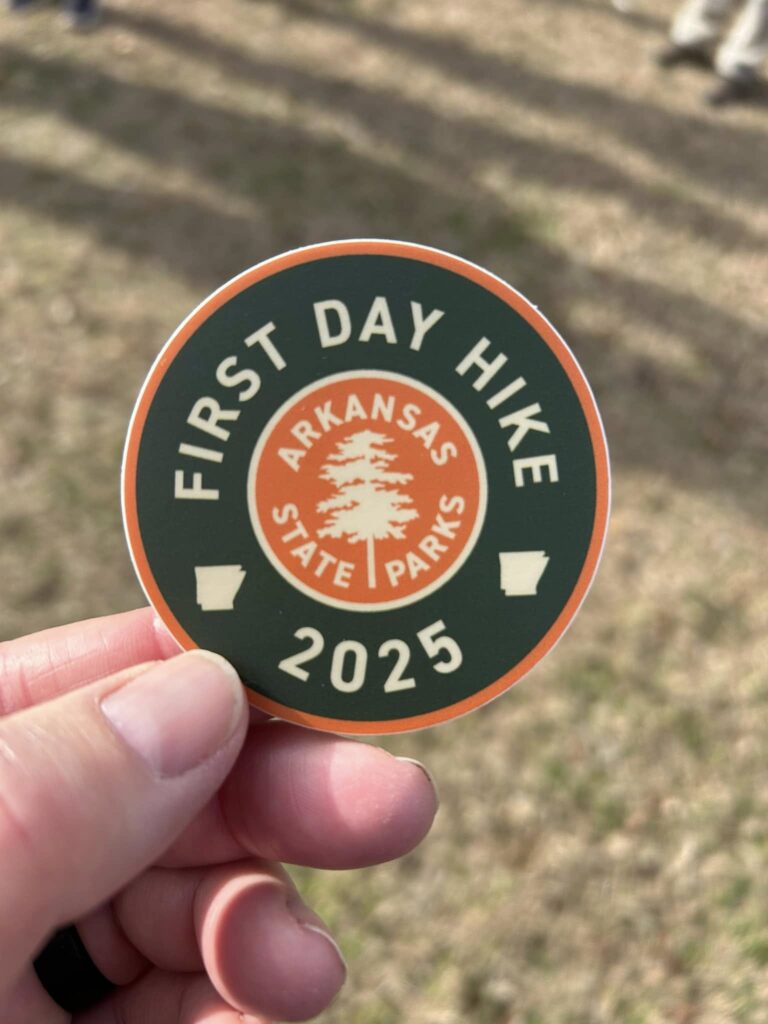
It was a little chilly to start but after going up hill for the first half of the trail, I was plenty warm when we finally started going down. At the end we got a sticker!

The Halloween Night Parade

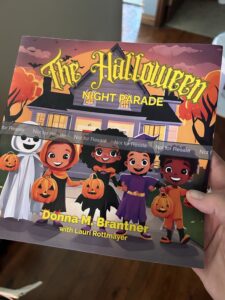
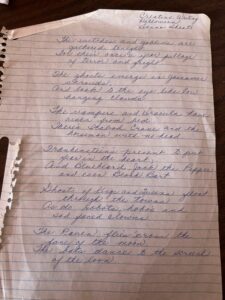
Back when my mom passed, I took 4 tubs of “things”. I wasn’t sure what to do with them and, because they were all in these tubs, I knew I could go through them when I had time. In one of the tubs I found this poem she wrote for a creative writing class. I believe my mom was a frustrated artist wannabe. She was very creative. She sewed and painted, and wrote among other things.

I took the poem and put it in my top desk drawer where I have seen it for the past several years every time I opened the drawer. I’m not sure why I took that out of the tubs and I didn’t know what I was going to do with it but there it remained for several years. Until last week.

Last week, I decided I would actually turn it into a children’s book. I’m not a huge Halloween fan and that put me off of the idea for a book for a few years but it finally seemed like this was the time to make it into a book.

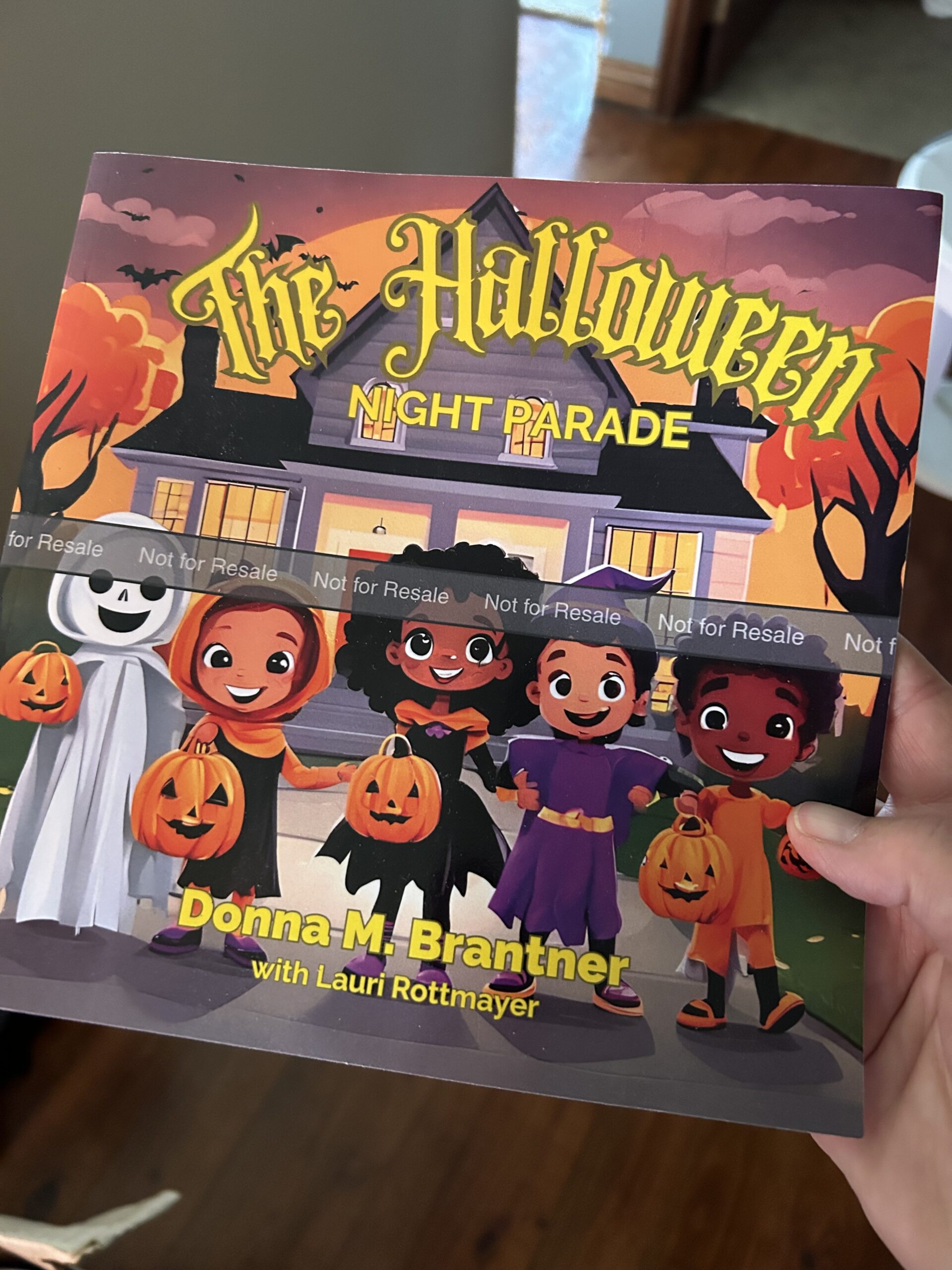
I used mostly her words. I created the illustrations with AI and I made minor adaptions to the poem to be better understood. The original post talked about Jack the Ripper, Black Bart, and Bluebeard which I though were a little obscure for kids. I also wrote the back cover text and titled it.

I got the book proof yesterday and it’s so cute! Best of all, I just know my mom would be tickled to have a book out there with her name on it. It will go on sale to the public on August 1. 🧡🧡🧡

Book Review: Wild About You

Just finished reading Wild About You! This book was so fun and I loved the characters.

Natalie is fantastic. She’s funny, warm, and trying to figure out life at 19 . I loved that the story captured the challenges of navigating young adulthood, especially when you might not have the strongest family support. She was FUNNY! I laughed so much.

And, Finn. He’s this gruff-but-sweet guy who adds a great dynamic to the story. Their banter is hilarious, and the way they communicate and work through issues feels realistic and refreshing. No unnecessary drama here!

The setting on the Appalachian Trail was really cool. The author did a great job bringing it to life, and while the reality show element played a role, it never took away from the characters themselves. It just added another layer of interest!

Overall, this book is a great pick-me-up. It’s a sweet romance with relatable characters facing real-life challenges. Plus, it definitely fed my wanderlust for the Appalachian Trail (which I also dream of hiking someday!).

If you’re looking for a fun read with great characters and a touch of adventure, check out Wild About You.